THE TWINS WHO MADE THE WORLD LOOK TWICE: Could You Really Tell Robin and Maurice Gibb Apart?
Introduction
There are photographs that make you remember a song. And then there are photographs that make you stop and look twice.
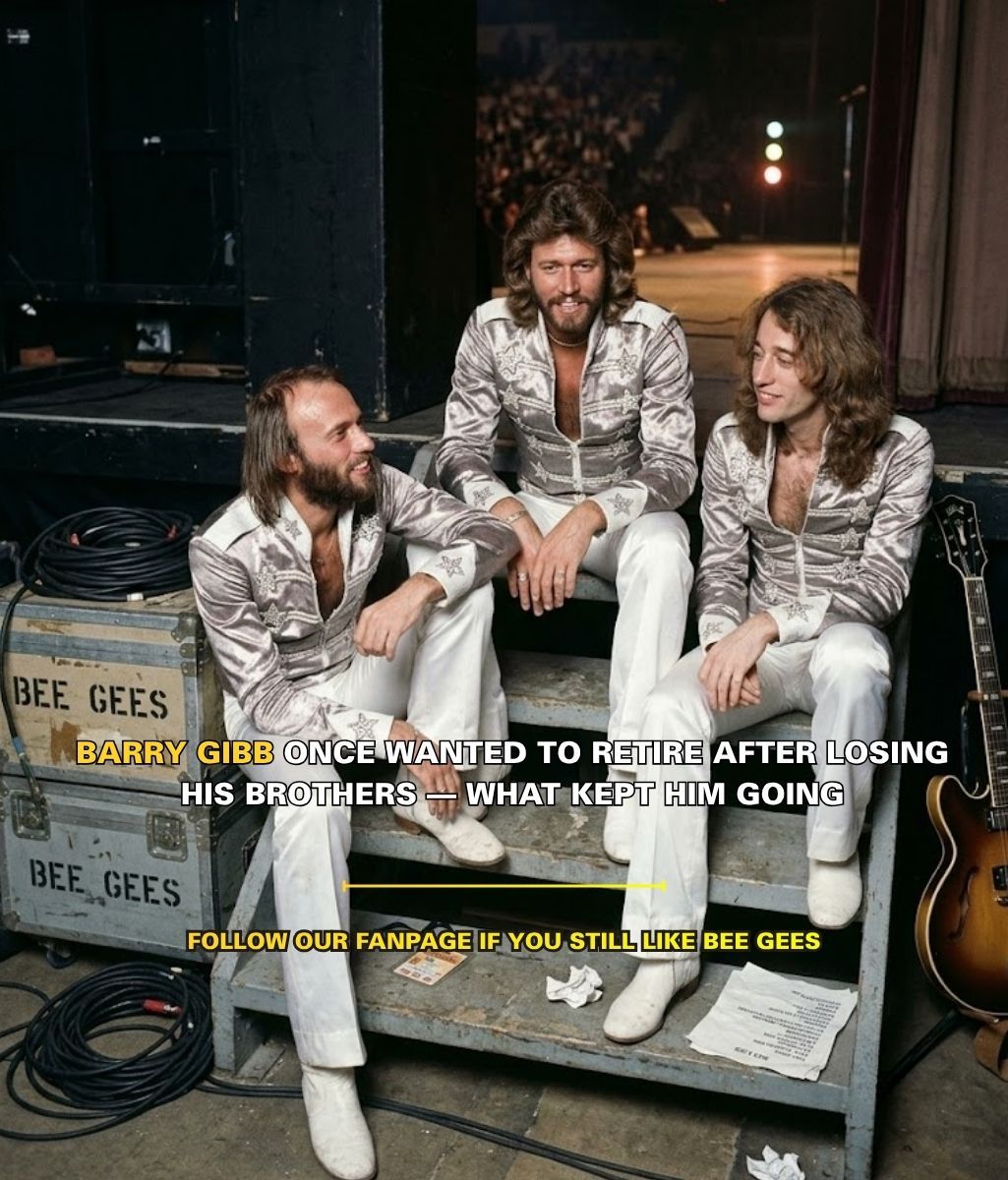
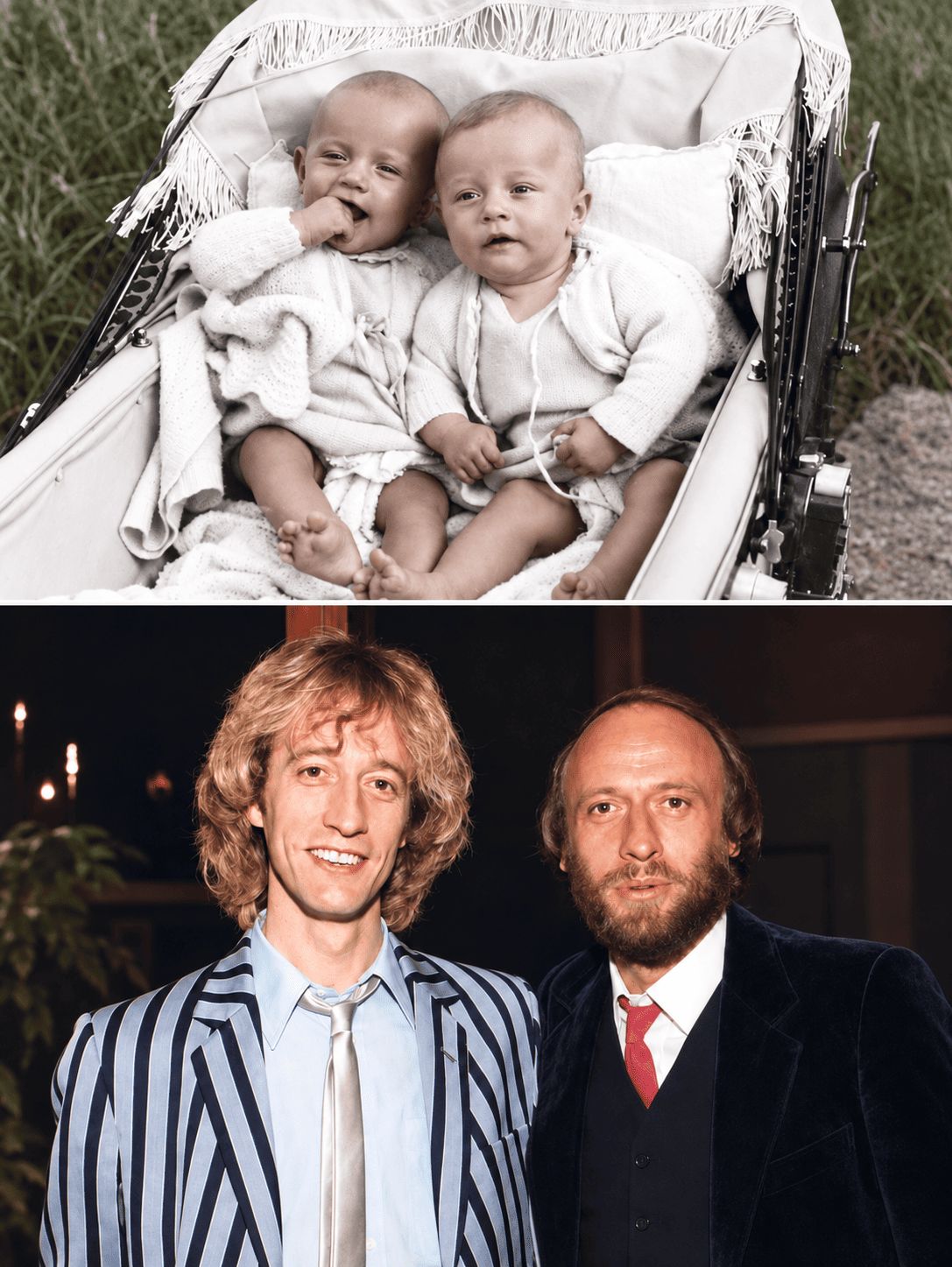
An old black-and-white image of the Bee Gees can do exactly that. There they are—three brothers who would eventually become one of the most recognizable musical acts in modern history. But look more closely at the two younger brothers, Robin Gibb and Maurice Gibb, and something curious begins to happen. For a moment, the familiar faces seem to merge. Which brother is which? Could you have identified them instantly if someone had shown you the photograph without telling you their names?
For longtime Bee Gees fans, that question may sound almost too simple. After all, decades of listening, watching television appearances, studying album covers, and seeing concert footage created a kind of visual memory. Fans learned the brothers not only by their faces, but by their voices, mannerisms, hairstyles, clothing, and the distinctive personalities they brought to the group.
Yet photographs from the brothers’ younger years can still be surprisingly difficult to read.
Robin and Maurice Gibb were fraternal twins, born on December 22, 1949, in Manchester, England. They were not identical twins, but their resemblance could nevertheless be remarkable, particularly during the early years of the Bee Gees. Their dark hair, youthful faces, similar expressions, and the natural closeness that came from growing up together sometimes created photographs in which the differences between them seemed far less obvious than they would become later.
That resemblance is part of what makes their story so fascinating.
The Bee Gees were, first and foremost, a family story. Barry, Robin, and Maurice Gibb did not simply happen to find themselves in the same band. They grew up together, performed together, experienced extraordinary success together, endured periods of difficulty and separation, and repeatedly found their way back to the music.
Their voices became part of the soundtrack of several generations.
But behind that enormous musical legacy were three brothers with different personalities and different creative roles.
Robin Gibb possessed one of the most immediately recognizable voices in popular music. His distinctive vibrato gave his singing an unmistakable emotional character. When Robin took the lead on songs such as “Massachusetts” and “I’ve Gotta Get a Message to You,” listeners could often recognize him within moments. There was an intensity in his delivery that separated his performances from those of his brothers.
His voice did not need to be loud to command attention.
It had character.
It had vulnerability.
And, most importantly, it had an identity of its own.
Maurice Gibb, meanwhile, occupied a different but equally important place within the Bee Gees’ musical architecture. He was a talented multi-instrumentalist and played an important role in the group’s arrangements and recordings. While Robin could become the emotional focal point of a performance, Maurice frequently worked within the musical foundation that allowed the brothers’ extraordinary vocal blend to exist.
That distinction becomes especially meaningful when looking back at photographs of the two men.
One might be tempted to treat the old pictures as nothing more than a guessing game: Robin or Maurice?
But the more closely you examine their lives, the more that question changes.
It becomes less about finding the correct face and more about understanding the two individuals behind those faces.
Robin and Maurice were born only minutes apart, yet they developed identities that music fans eventually learned to recognize almost instinctively. Robin became associated with that unmistakable lead voice and dramatic emotional delivery. Maurice became closely associated with musicianship, arrangement, harmony, and the many details that helped make the Bee Gees sound like the Bee Gees.
And that is precisely why those early photographs are so intriguing.
Before the fame became enormous, before the world knew every contour of their voices, they were simply two young brothers standing beside one another.
The photograph does not tell us which brother will become known for a particular song. It does not reveal which recording will eventually become a treasured memory for millions of listeners. It does not show us the decades of performances, studio sessions, changing fashions, reunions, achievements, or personal losses that lie ahead.
It simply captures a moment.
That is what makes old music photographs so powerful for older fans.
A photograph from the early Bee Gees years can bring back an entire era—not just a song, but a time in life when music arrived through records, radio, television appearances, magazines, and carefully collected album covers. For many listeners, discovering the Bee Gees was part of growing up. Their music followed people through different stages of life, and memories became attached to particular voices almost without anyone realizing it.
Today, those memories carry another layer of meaning.
Maurice Gibb died in January 2003 at the age of 53. Robin Gibb died in May 2012 at 62. Their passing transformed the way many fans looked at photographs of the brothers. Images that once seemed ordinary became historical fragments of a family and a musical partnership that could never be recreated in quite the same way.
And yet the photographs remain.
In one, Robin might appear to be the brother you immediately recognize. In another, Maurice may seem unmistakable. Then another image appears—and suddenly the certainty disappears.
Perhaps that is the charm of the mystery.
Because the real story is not that Robin and Maurice looked alike.
It is that two brothers who entered the world together eventually developed voices, personalities, and musical identities that millions of people could recognize separately.
The faces may have fooled the eye.
The music rarely did.
And when you look again at those early photographs today, you may find yourself doing something completely different from what you expected. Instead of simply asking, “Which one is Robin?” or “Which one is Maurice?”, you begin remembering where you were when you first heard them.
That may be the most enduring power of the Bee Gees.
The photograph preserves their faces.
The recordings preserve their voices.
And the memories belong to everyone who was listening.