
WHEN THE BROTHERS WERE GONE, THE MUSIC REMAINED — The Heartbreaking Journey That Brought Barry Gibb Back to the…
Watch the video at the end of this article.
Introduction
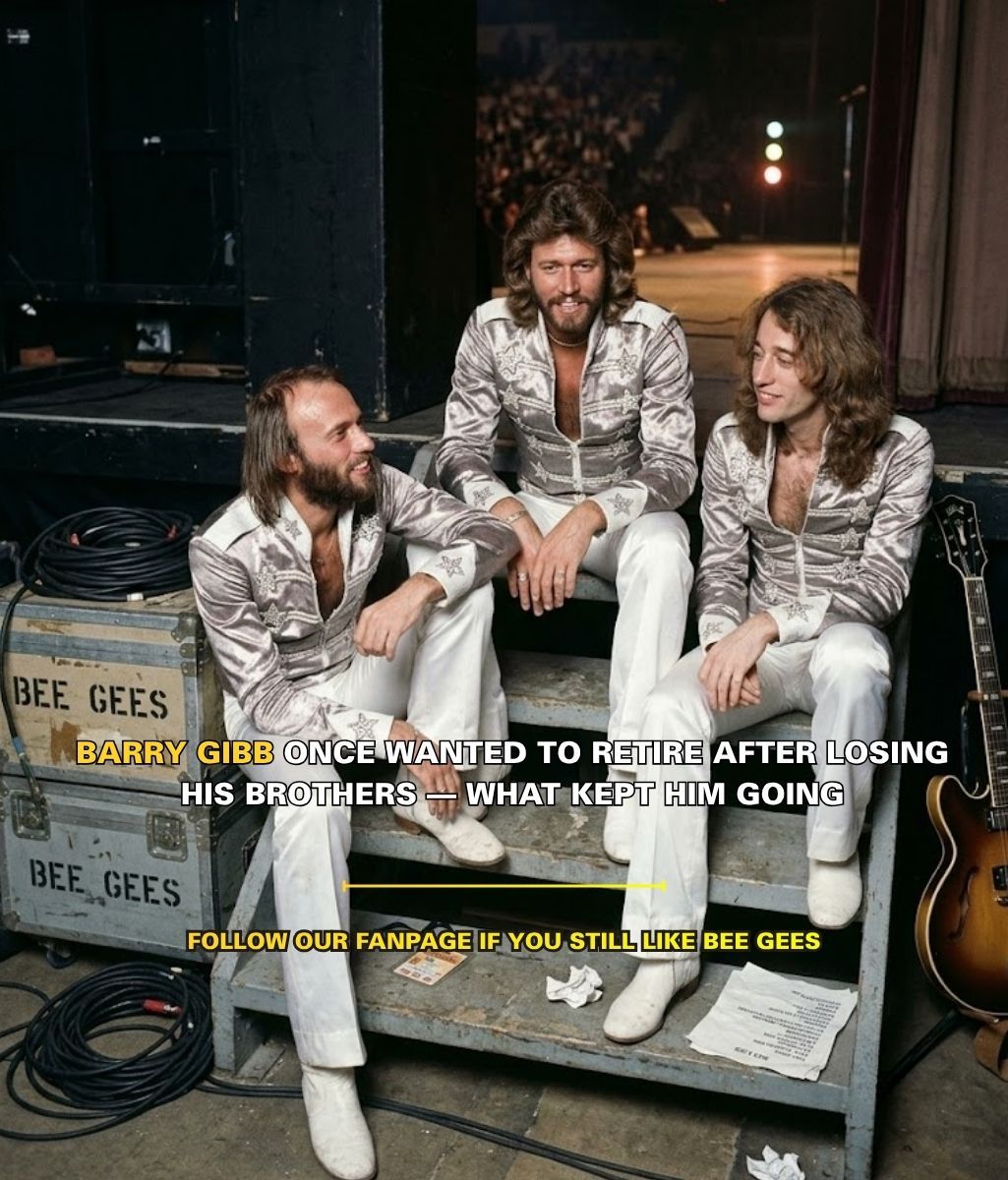
The lights were still shining, the microphones were still waiting, and the songs were still there—but after the loss of his brothers, the stage no longer felt the same for Barry Gibb. Maurice Gibb died in 2003, and Robin Gibb followed in 2012. With both brothers gone, Barry became the last remaining member of the Bee Gees. Suddenly, the harmonies that had defined an entire generation seemed impossibly distant. The music remained, but the voices that had made it so special were gone.
For Barry, the loss was not simply the end of a musical partnership. Maurice and Robin were his brothers, lifelong companions, and the people who had shared the extraordinary journey of the Bee Gees with him. They grew up together, wrote songs together, performed together, faced difficult years together, and celebrated remarkable successes together. Their story was woven into nearly every chapter of Barry’s life.
After Robin’s death in 2012, the silence became especially difficult. Barry was suddenly left carrying a legacy that had always belonged to three voices. The thought of standing beneath the lights without Maurice and Robin was painful. The audiences would still be there. The applause would still come. The songs would still be familiar. But the people who created those songs with him were no longer there to share the moment. Their harmonies were not merely musical arrangements. They were the sound of family.
For a time, a quieter life seemed easier. Away from the stage, Barry could spend more time with his family and grandchildren. He could step back from the demands of touring and allow years of memories to settle. After decades of airports, recording studios, concerts, interviews, and constant travel, there was something comforting about a life away from the spotlight.
Yet music has a strange way of finding people again. The songs that reminded Barry of Maurice and Robin gradually became something more than memories of loss. They became a connection to the brothers he had shared so much with. Every melody carried a memory. Every familiar harmony brought back another moment. Every song seemed to hold a small piece of their shared history.
The music had not disappeared. It had survived.
That realization helped Barry understand that continuing was not the same as leaving his brothers behind. He did not have to pretend nothing had changed. He did not have to replace Maurice or Robin. He simply had to carry forward what they had created together.
With encouragement from his family and support from those around him, Barry eventually returned to performing. His return was not about recreating the Bee Gees exactly as they had once been. It was about keeping their songs alive and allowing new generations to experience music that had meant so much to millions.
For longtime listeners, that distinction is especially meaningful. Many first heard the Bee Gees decades ago on a car radio, at a family gathering, or during a quiet evening at home. Their songs became attached to personal memories. Years later, hearing them again can bring back people, places, and moments that seemed forgotten.
Barry understood that power because he had lived it himself.
Each performance became more than a return to the past. It became a way of carrying the past into the present. The stage became a place where grief and gratitude could exist together. There could be sadness because Maurice and Robin were gone, but there could also be appreciation for everything they had created.
That is one of the difficult truths about grief: time does not necessarily erase the pain of losing someone you love. Instead, the relationship changes. Memories that once felt unbearable can eventually become sources of strength. The person is no longer physically present, but their influence remains.
Barry’s journey reflects that transformation. The Bee Gees were built on a remarkable combination of individual talent and family harmony. Barry, Maurice, and Robin created something that could not simply be duplicated. Their voices were intertwined in a way that became part of music history. When two of those voices were gone, Barry faced an impossible question: How do you continue when the people who helped create your greatest memories are no longer beside you?
His answer came through the music.
He continued because the songs still mattered. He continued because listeners still cared. He continued because Maurice and Robin had left behind a body of work that deserved to be heard. Most importantly, he continued because remembering does not always mean standing still.
Sometimes remembering means moving forward while carrying someone with you.
That is what Barry’s performances came to represent. Each concert could become a quiet tribute. A familiar song could bring an absent brother closer for a few minutes. A harmony could remind everyone of what once was. An audience could sing along, transforming personal memory into something shared.
The stage was no longer the same. But perhaps it did not need to be.
The brothers were gone, but the music remained. As long as those songs continue to be played, Maurice and Robin remain part of the story. Their voices still reach listeners across generations. Their melodies still fill rooms. Their work still brings people together.
Barry did not return to replace his brothers.
He returned to honor them.
In the end, that may be the most beautiful lesson in his journey. Grief can change the way we hear a song, the way we remember a person, and the way we understand the passage of time. But it does not have to silence love.
Sometimes, love finds another way to speak.
For Barry Gibb, that voice was music.