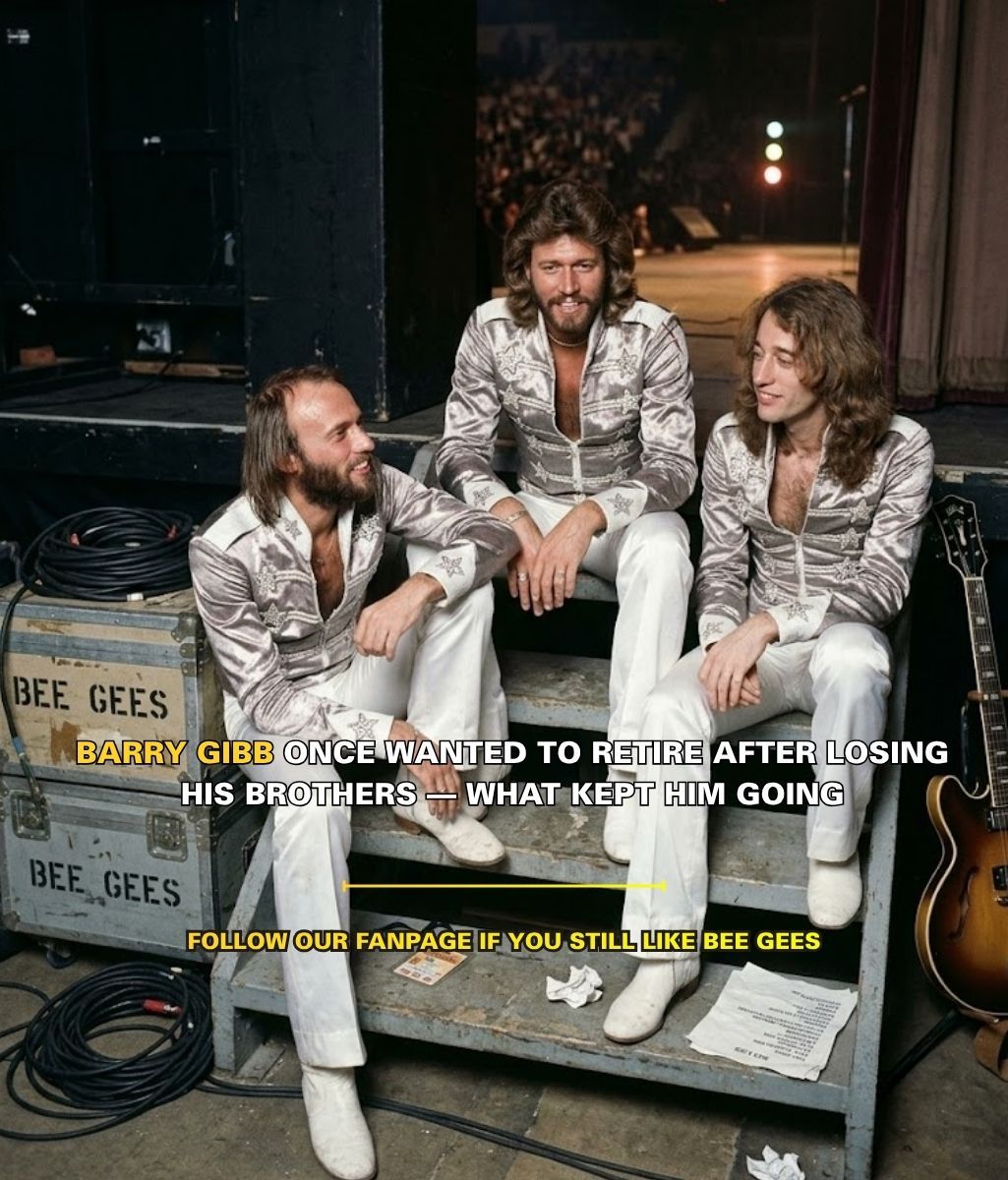
THE SONG THAT CAME WHEN FRANKIE VALLI NEEDED A NEW BEGINNING — AND BARRY GIBB CHANGED THE SOUND OF HIS NEXT…
Introduction
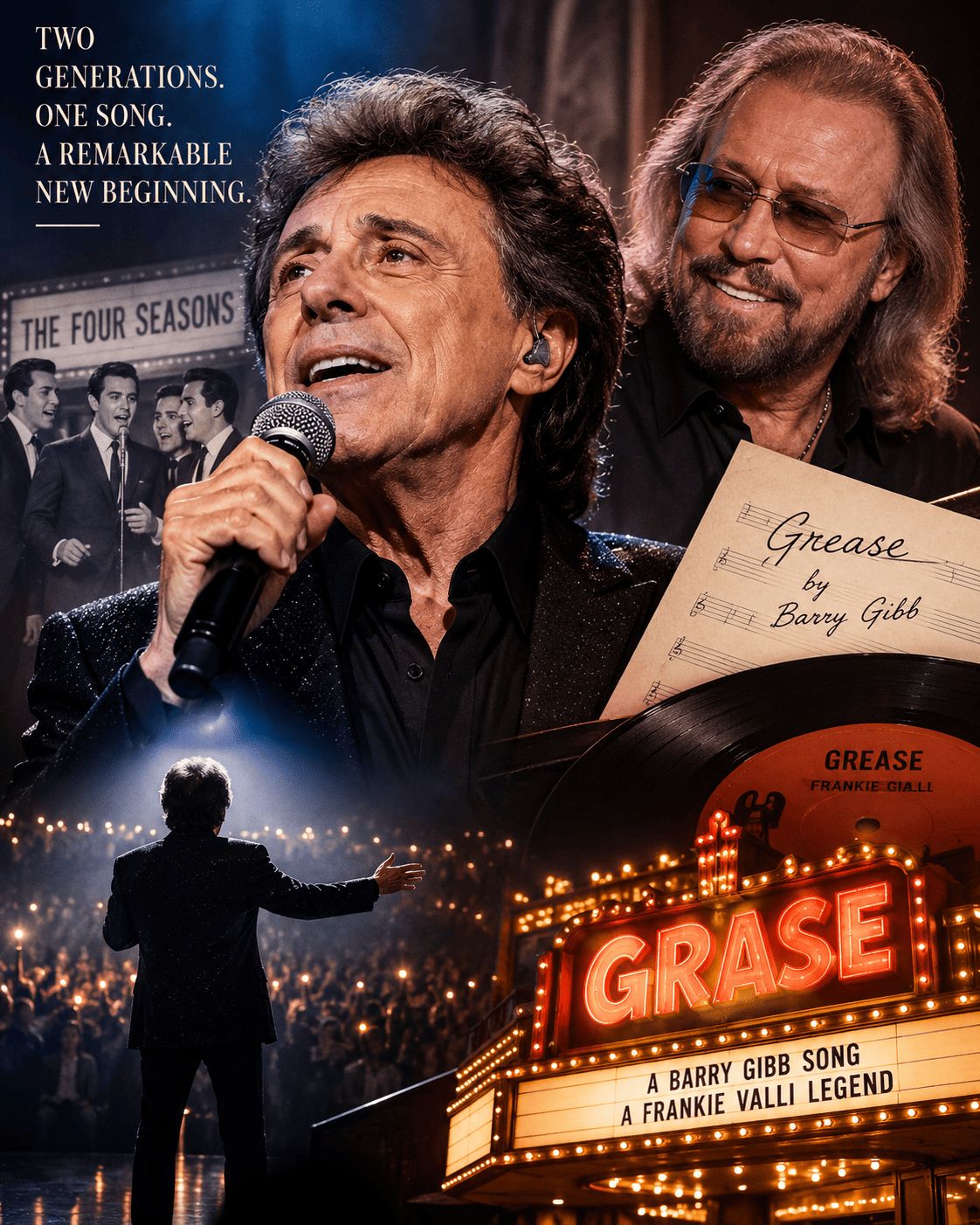
There are moments in a long musical career when the past suddenly meets the future in a single recording studio.
For Frankie Valli, one of those moments arrived in 1978.
By then, his voice was already part of the memory of an entire generation. Long before the opening notes of “Grease” reached radio stations around the world, listeners had learned to recognize Valli almost immediately. His distinctive falsetto had helped define the sound of The Four Seasons, carrying songs such as “Sherry,” “Big Girls Don’t Cry,” “Walk Like a Man,” and “Rag Doll” into the history of American popular music. His solo career had brought another landmark with “Can’t Take My Eyes Off You,” while “My Eyes Adored You” later gave him another No. 1 success.
But by the late 1970s, popular music had changed dramatically.
The generation that had grown up with The Four Seasons was getting older. New sounds were dominating radio. Disco was everywhere. The Bee Gees were at the center of a musical transformation that seemed almost impossible to escape. And somewhere between the world that had made Frankie Valli famous and the world that was now emerging, a remarkable opportunity appeared.
It came from Barry Gibb.
The story is often remembered in almost mythical terms: FRANKIE VALLI COULD BARELY HEAR HIMSELF SING — THEN BARRY GIBB HANDED HIM ONE SONG THAT CHANGED EVERYTHING.
But the deeper story is not simply about a legendary singer being rescued by another legendary songwriter.
It is about timing, reinvention, trust, and the extraordinary ability of a great song to give an established artist another chapter.
Barry Gibb wrote “Grease” as the title song for the 1978 film. According to the GRAMMYs, Gibb wrote the song entirely himself, and he also contributed backing vocals to Valli’s recording. The recording additionally featured Peter Frampton on lead guitar.
That combination is important.
Because “Grease” did not sound like a Four Seasons record.
It did not attempt to recreate 1962.
It did not ask Frankie Valli to pretend that the musical world had stood still.
Instead, it placed one of the most recognizable voices of the previous generation inside a completely different musical landscape.
And somehow, it worked.
THE VOICE HE COULD BARELY HEAR became the voice millions of listeners heard again.
There is something deeply moving about that transition.
For decades, Valli had built his career around an instrument that was instantly recognizable. Yet the human reality behind any singer’s voice is more complicated than what audiences hear through speakers. Valli has spoken publicly over the years about the importance of his hearing and about the physical challenges that can accompany a career built around constant performing. What listeners ultimately received, however, was never the uncertainty backstage. They heard the finished performance.
That distinction matters.
Because when we listen to “Grease” today, it is easy to forget how unusual the moment actually was. Valli was not simply recording another song. He was entering a new musical era with a songwriter whose own career had suddenly become one of the most powerful forces in popular music.
The timing was almost cinematic.
The Bee Gees had become enormous international stars during the same period, with Barry, Robin, and Maurice Gibb establishing themselves not only as performers but as remarkably successful songwriters for other artists. GRAMMY coverage has highlighted how the Gibb brothers wrote major songs for performers ranging from Barbra Streisand and Diana Ross to Dionne Warwick, Celine Dion, and Frankie Valli.
Barry therefore understood something that experienced songwriters often understand better than anyone else:
A great song does not merely belong to the person who writes it.
It can become something completely different when another voice gives it life.
And Frankie Valli gave “Grease” something Barry Gibb could not have supplied himself.
He gave it history.
He gave it a voice that had already spent decades teaching listeners what emotional recognition sounded like.
That is why the recording feels larger than a soundtrack performance.
It feels like two musical generations meeting.
On one side stood Frankie Valli — a singer whose career stretched from the early days of The Four Seasons into the rapidly changing world of the late 1970s. On the other stood Barry Gibb — a songwriter at the center of one of the most influential musical moments of the decade.
The result was not merely a nostalgic return.
It was a reinvention.
And the numbers tell part of the story. “Grease” reached No. 1 on the Billboard Hot 100, becoming one of the most significant solo recordings of Valli’s career. GRAMMY records also show that the Grease soundtrack received a nomination for Album of the Year at the 21st Annual GRAMMY Awards.
But statistics cannot completely explain why the song has lasted.
For older listeners especially, the emotional power of this story comes from something much more familiar than charts.
It is the feeling of reaching a point in life when the world seems to be moving forward without you — and then discovering that your story is not finished yet.
Frankie Valli had already achieved what many singers could only dream about. He had the hits. He had the history. He had the voice people could identify within seconds.
Yet “Grease” demonstrated that a long career does not necessarily mean repeating the past.
Sometimes longevity means finding a new way to make the past relevant to the present.
That is what Barry Gibb’s song gave Valli.
Not a replacement for everything that came before.
Not a denial of the difficulties that came with getting older.
But a new door.
And perhaps that is why the story still resonates.
Because every generation eventually reaches a moment when the music around it changes. The artists we once thought would always dominate the radio become memories. New voices appear. New production styles arrive. The world moves on.
Yet every once in a while, something extraordinary happens.
An artist from one era meets a songwriter from another.
A song arrives at exactly the right moment.
And suddenly, the voice you thought belonged to yesterday is standing in the middle of tomorrow.
For Frankie Valli, that song was “Grease.”
And for millions of listeners, the recording became something more than a movie theme.
It became a reminder that a voice with history can still have a future.
That may be the most enduring lesson hidden inside the story of Frankie Valli and Barry Gibb — not that one man saved another, but that great music can recognize something in an artist before the rest of the world has finished writing that artist’s story.
And sometimes, all it takes is one song.