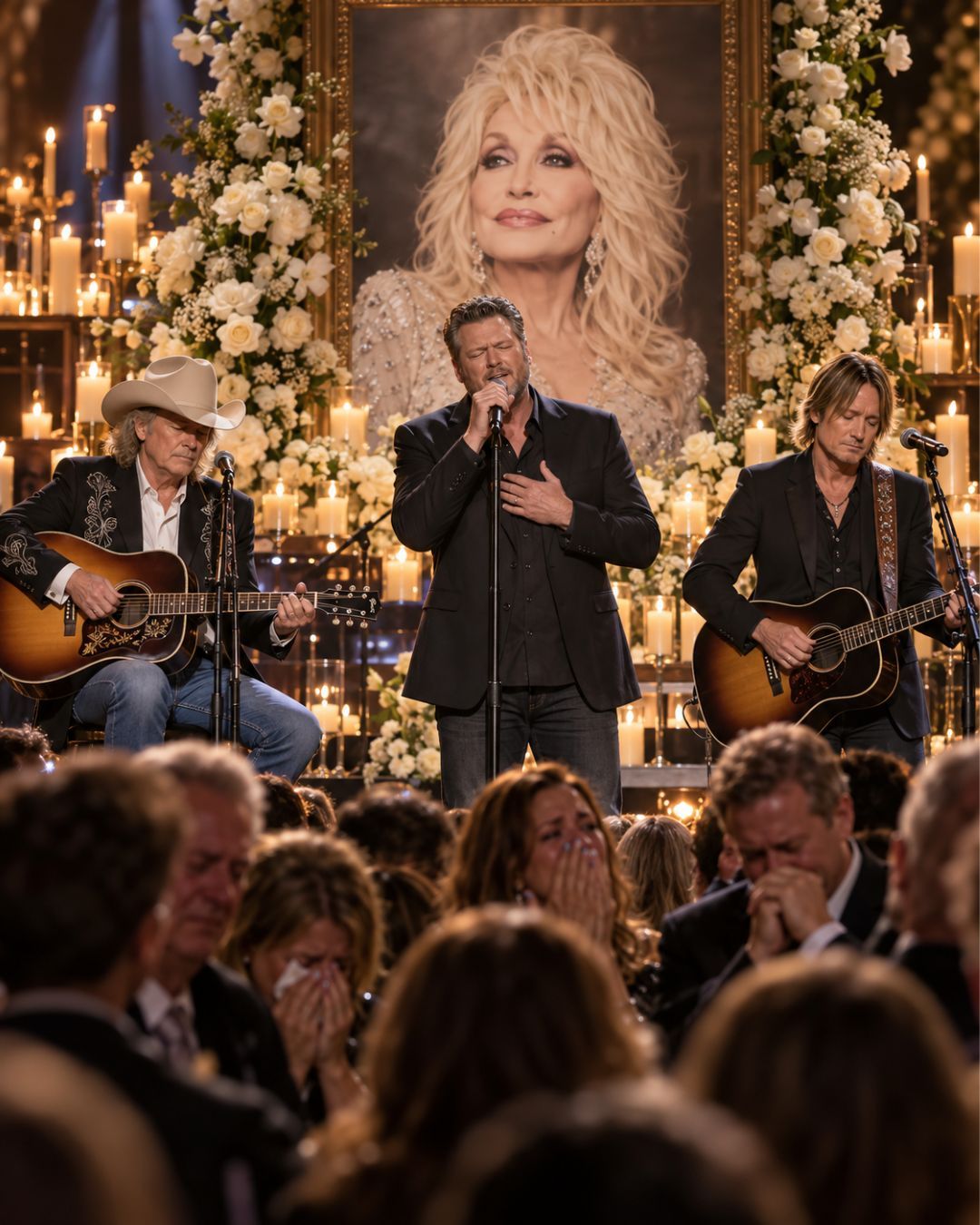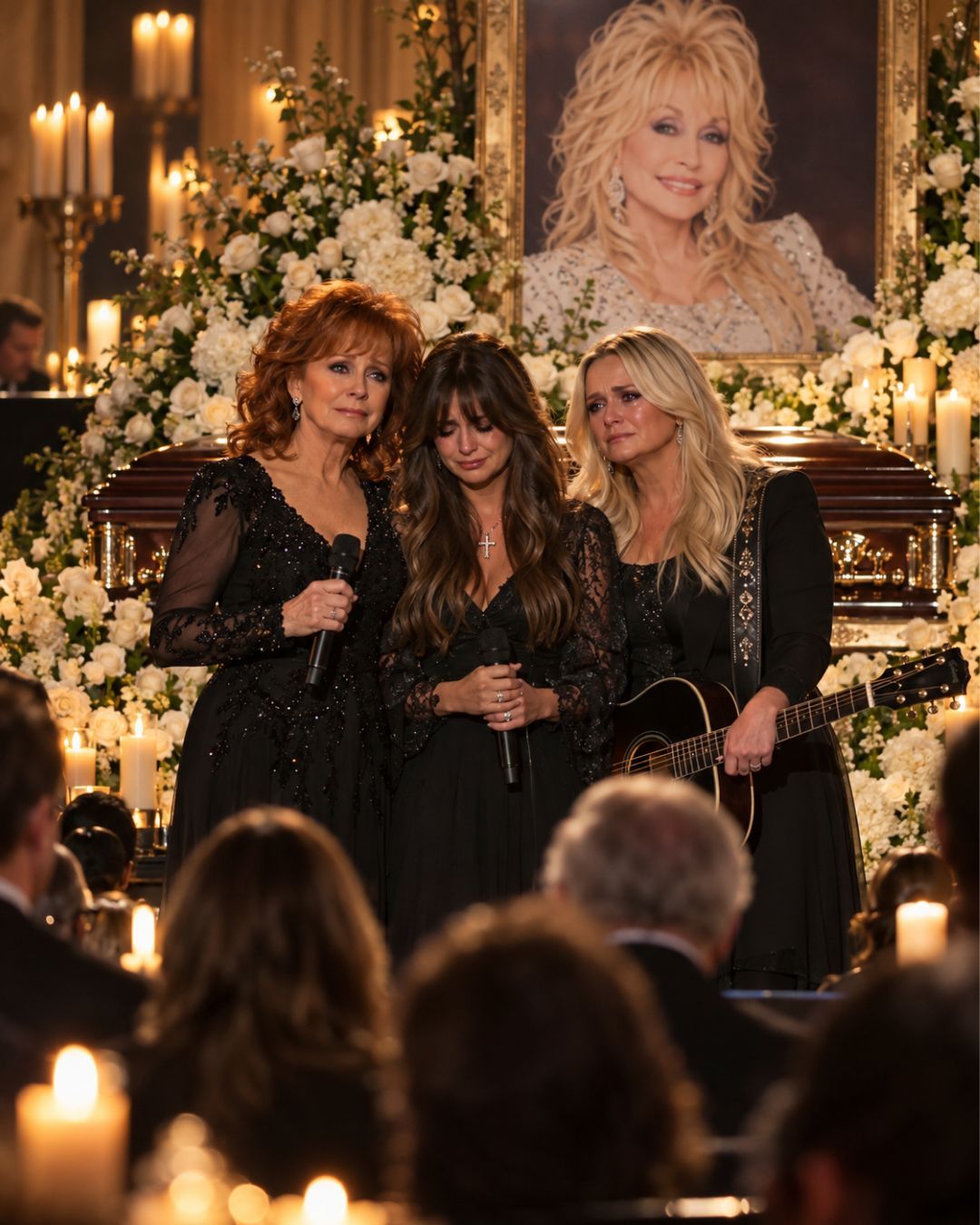
WHEN DOLLY PARTON’S VOICE FELL SILENT, THE MOUNTAINS SEEMED QUIETER — BUT HER SONGS WERE ONLY BEGINNING TO…
Introduction
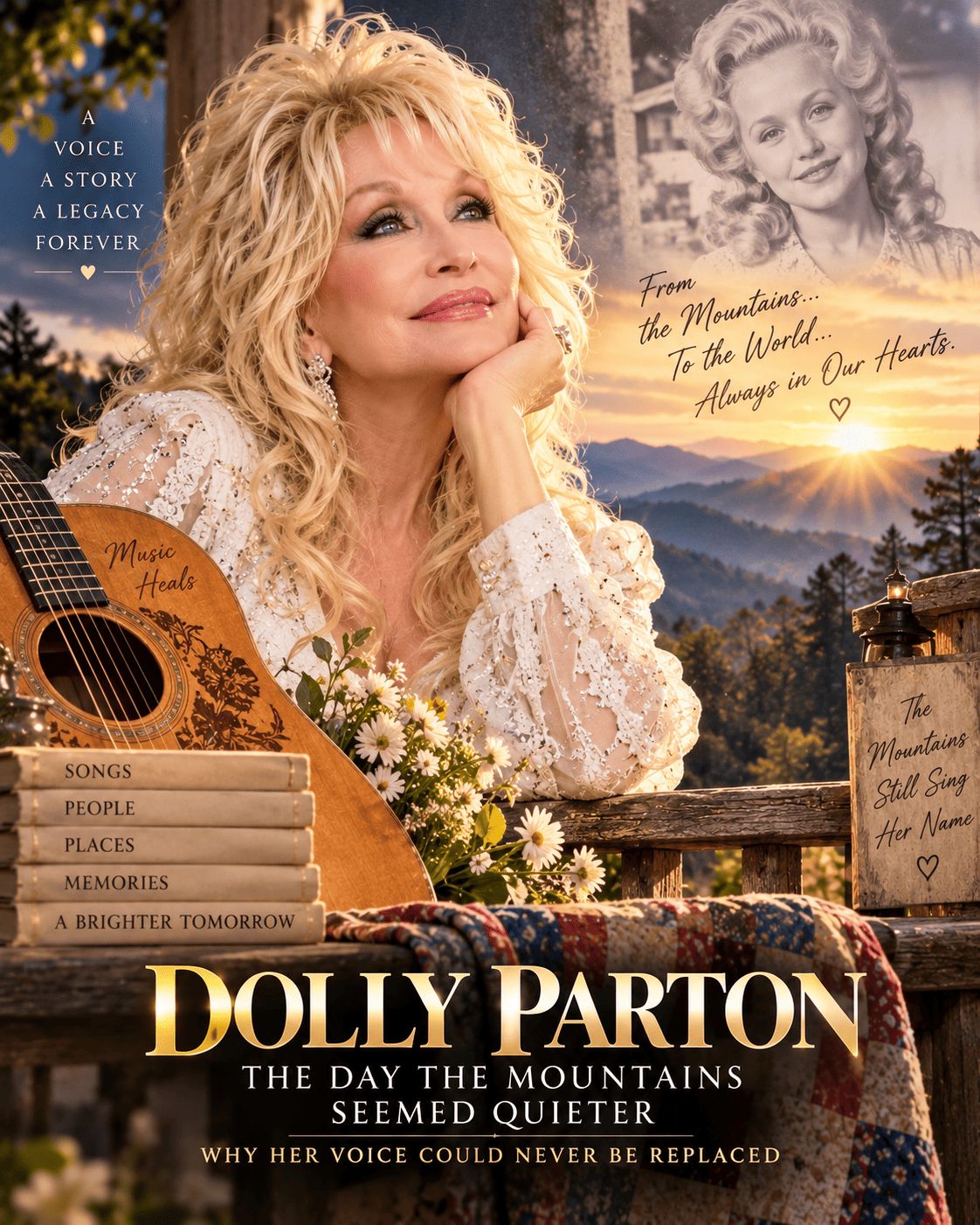
There are moments in music history when the loss of an artist feels larger than the loss of a performer. The passing of Dolly Parton on August 25, 2026, at the age of 80 was one of those moments. Her death closed the life of an extraordinary singer, songwriter, storyteller, philanthropist, and cultural figure, but it did not close the stories she spent a lifetime putting into song.
For generations of listeners, Dolly was never simply a name on a record or a familiar face beneath concert lights. She became part of the background music of ordinary American life. Her songs traveled through kitchens, living rooms, cars, churches, family gatherings, country roads, and quiet evenings at home. They accompanied people through childhood, marriage, parenthood, disappointment, remembrance, and the long passage of years.
That is why THE DAY THE MOUNTAINS SEEMED QUIETER — WHY DOLLY PARTON’S VOICE COULD NEVER BE REPLACED carries such emotional weight.
It is not simply about the silence left behind by the death of a beloved performer.
It is about what happens when a voice that has been familiar for so many decades is suddenly heard only through recordings.
Dolly’s official biography and career history reveal the extraordinary breadth of that journey. From her Appalachian upbringing to international recognition, she carried the influence of East Tennessee with her. Her music remained deeply connected to family, memory, faith, determination, and the experiences of people who understood that a modest beginning could still contain an enormous dream.
The Smoky Mountains were never merely scenery in Dolly Parton’s story.
They represented a way of seeing the world.
They represented home.
They represented the people who shaped her before the rest of the world knew her name.
And perhaps most importantly, they represented the understanding that a person’s origins do not have to limit the size of their imagination.
Dolly eventually performed on some of the largest stages imaginable, but she never needed to abandon the storytelling instincts that came from those early years. Her greatest songs often began with remarkably familiar things: a family memory, a difficult goodbye, a childhood experience, a dream of something better, or the quiet ache of remembering someone who is no longer nearby.
That was one of her rare gifts.
She could take something deeply personal and make millions of people feel that it belonged to them, too.
For older listeners, that connection can be especially powerful.
A song heard decades ago does not remain frozen in the past. It changes as the listener changes.
The words may sound different after raising a family.
A melody may feel different after losing a parent.
A song about home can become more meaningful after years spent living somewhere else.
And a familiar voice can suddenly bring back a room, a road, a face, or a particular season of life that seemed forgotten.
That is what Dolly Parton’s music did so naturally.
It preserved memories.
Her songs became little pieces of personal history for people who had never met her.
And now, after her passing, those memories carry another layer of meaning.
The official announcement described Dolly as an artist whose seven-decade career reached across music, philanthropy, acting, writing, and countless other creative fields. Her team has also emphasized that she continued working on projects until the end of her life, leaving behind plans that will continue to emerge in the years ahead.
That detail matters because Dolly’s legacy was never confined to recordings.
She believed in creating things that could continue helping people.
Her Imagination Library, for example, became one of the clearest expressions of that philosophy, bringing books to children and encouraging a lifelong love of reading. In September 2026, the Dollywood Foundation announced Give Like Dolly Day, a global initiative intended to honor her legacy by encouraging people to make a difference in a child’s life.
So when people speak about Dolly’s voice being irreplaceable, they are not necessarily saying that nobody else can sing.
Of course other singers will come.
Other songwriters will tell beautiful stories.
New generations will create their own music.
But nobody else can reproduce the particular combination of experiences, memories, humor, musical instincts, Appalachian roots, determination, and compassion that made a Dolly Parton song unmistakably hers.
That is what makes an artist irreplaceable.
Not simply the sound of the voice.
The life behind it.
Think about “Coat of Many Colors.”

The power of that song does not depend upon spectacle. It comes from memory. A childhood experience becomes a story, and the story becomes something larger than the original moment. The listener is invited to understand that dignity does not come from possessions, but from love, family, and the meaning we attach to the things we remember.
That idea has survived for decades because it speaks to something universal.
The same can be said of songs such as “Jolene” and “I Will Always Love You.” Each belongs to a different emotional world, yet each demonstrates Dolly’s remarkable ability to communicate directly and clearly. Her songwriting could be tender without becoming complicated and powerful without requiring unnecessary decoration.
That clarity became part of her signature.
And now it becomes part of her legacy.
The official Dolly Parton organization continues to announce projects that carry her name and reflect work she had already helped shape. New museum experiences, the SongTeller Hotel, future performances and productions, and other projects are being brought forward as part of the continuing story of her work.
In other words, the story did not end on the day Dolly left us.
It changed.
Perhaps that is why the image of the mountains feels so appropriate.
The mountains remain.
The roads remain.
The old songs remain.
The memories remain.
And somewhere, perhaps in a quiet living room far from Nashville, someone will press play on an old Dolly Parton recording. The first notes will begin. Within seconds, that unmistakable voice will fill the room.
For a moment, time may feel different.
A listener may remember being younger.
They may remember someone they loved.
They may remember a mother, a father, a childhood home, a long drive, a family gathering, or an evening when one of Dolly’s songs seemed to understand something they could not quite put into words themselves.
That is the strange beauty of music.
An artist can leave the world, yet remain present in the lives of people who continue listening.
And perhaps that is the most meaningful answer to the question of why Dolly Parton’s voice could never be replaced.
It was never only a voice.
It was a collection of memories.
It was a lifetime of stories.
It was the sound of a woman who came from a small mountain community and somehow found a way to make millions of people feel that their own ordinary lives were worthy of being remembered.
The mountains may seem quieter now.
But they are not empty.
Her songs are still there.
Her stories are still there.
Her generosity is still there.
And every time one of those familiar melodies begins again, another generation will discover what millions already knew:
Dolly Parton did not simply leave behind music. She left behind a way of remembering.
And that may be the part of her legacy that no passing of time can ever replace.
Video