THE DAVID PHELPS SONG THAT TAUGHT US HOW TO WALK THROUGH THE STORM
Introduction
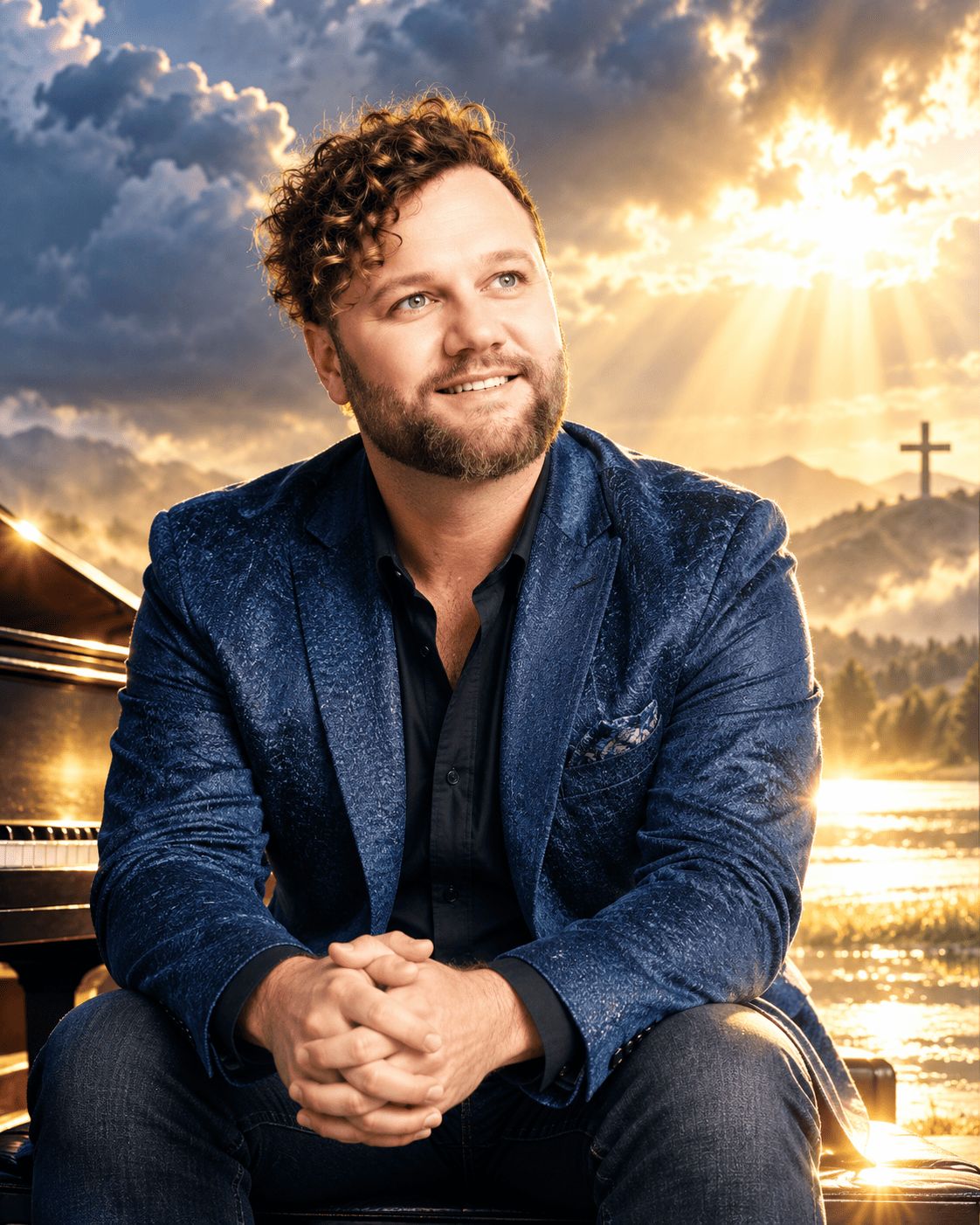
Some storms arrive so quietly that we do not realize how deeply they have changed us until the skies finally begin to clear. And sometimes, years later, a song comes along that does not try to explain the storm away—it simply helps us see it differently.
That is what makes David Phelps’ “Rain” so memorable.
Released as part of Freedom, the 2015 project produced by Phelps and Bill Gaither, “Rain” sits inside an album built around deeply human and spiritual themes: brokenness, faith, doubt, hope and freedom. Gaither’s own introduction to the project described it as a collection of songs reflecting Phelps’ journey, not simply a showcase for his remarkable voice.
And perhaps that distinction is exactly why “Rain” continues to invite another listen.
WHEN THE STORM BECOMES PART OF THE STORY
There are seasons in life when the rain seems to have no schedule.
It comes when we are tired. It comes when plans change. It comes when someone we love is no longer sitting beside us. It comes when the future looks different from the future we once imagined.
When we are young, we often think the goal is to get through the storm as quickly as possible.
But age has a way of teaching us something different.
After enough years, we begin to understand that some storms cannot simply be avoided. Some must be walked through.
That is where “Rain” finds its emotional power.
Rather than treating the storm as the final chapter, the song can be heard as a reflection on what happens inside us while we are waiting for the weather to change.
And that is a deeply familiar idea to anyone who has spent decades walking through life with faith.
The rain may still be falling.
But perhaps we are no longer the same person standing underneath it.
DAVID PHELPS DOESN’T NEED TO OUTSING THE MOMENT
David Phelps has never needed an introduction when it comes to vocal ability.
Gaither’s official profile describes him as one of the most spectacular voices in contemporary Gospel music, noting a range extending beyond three octaves and, just as importantly, a gift for communicating a song.
That second part matters here.
Because “Rain” is not interesting simply because David Phelps can sing it.
It is interesting because his voice gives the listener somewhere to go emotionally.
There is a difference between hearing someone demonstrate what their voice can do and hearing someone use that voice to make you remember something you had almost forgotten.
The latter is what great Gospel music has always done.
It takes something personal and somehow makes it communal.
A single voice becomes a doorway.
A melody becomes a memory.
And a song becomes a place where people can quietly bring the parts of their lives they do not always know how to explain.
That is especially important in a project like Freedom. Phelps said the songs represented “snapshots” of where he was on his journey and expressed his hope that listeners could relate to them and be encouraged. He also described his dependence on grace as part of that journey.
That is a very different message from perfection.
It is a message of grace.
THE OLDER WE GET, THE MORE THE RAIN MEANS
For someone hearing “Rain” at 25, the metaphor might simply sound poetic.
For someone hearing it after 50, 60 or beyond, it can feel remarkably personal.
Because by then, most of us have known several kinds of rain.
We have watched children grow up.
We have said goodbye to people who once seemed as though they would always be there.
We have experienced seasons of uncertainty, disappointment, rebuilding and unexpected joy.
We have learned that life rarely moves in a straight line.
And perhaps most importantly, we have learned that faith does not always mean having every answer.
Sometimes faith is simply taking another step.
Then another.
And another.
That is one reason Gospel music has remained meaningful across generations. It does not require life to be perfect before it can become a song.
Quite the opposite.
The broken places are often where the music becomes most honest.
The questions can remain.
The tears can remain.
The unanswered prayers can remain.
And still, there can be hope.
THE GAITHER CONNECTION MAKES THE STORY EVEN RICHER
For longtime listeners of the Gaither Vocal Band, David Phelps is remembered not only as a remarkable tenor but as part of a musical tradition built around communication, harmony and testimony.
His history with the group is part of a larger Gaither story in which individual voices have repeatedly become part of something bigger than themselves.
Interestingly, Freedom itself carried that connection into Phelps’ solo work. The project included members of the Gaither Vocal Band providing background vocals, including Bill Gaither, Wes Hampton, Adam Crabb and Todd Suttles at the time of the recording.
That detail matters because Gospel music has always understood something that many other musical traditions sometimes forget:
A great voice can move you. But harmony can make you feel that you are not alone.
That is why a live performance can be so powerful.
There is the singer.
There is the band.
There are the harmonies.
There is the room.
And then there is the audience—people carrying their own memories into the same song.
For a few minutes, all those stories meet.
THE STORM DOESN’T HAVE TO DISAPPEAR
Perhaps the most beautiful way to understand “Rain” is not as a promise that another storm will never come.
Life does not offer that promise.
Instead, the song can be heard as a reminder that our understanding of the storm can change.
The same rain that once felt like an interruption may eventually become part of the story we tell about how we learned to trust.
The same difficult season we once wanted to forget may eventually become the season that taught us patience.
The same uncertainty that frightened us may become the place where we discovered that faith was more than having answers.
It was continuing to walk.
That is a message mature listeners understand instinctively.
We do not need every cloud removed before we can be grateful.
We do not need every question answered before we can worship.
And we do not need a perfect life before we can find inspiration in a song.
Sometimes we simply need someone to sing what our hearts have been trying to say.
AND THAT MAY BE THE REAL GIFT OF “RAIN”
David Phelps does not have to become the hero who defeats the storm.
He can simply be the voice carrying us through it.
That is a much more human story.
A more mature story.
And perhaps a more Gospel-centered one.
Because the deepest songs are rarely about pretending that storms never happen.
They are about discovering what remains when the storm does.
Faith.
Hope.
Grace.
Worship.
And the quiet realization that even after everything changes, there are still melodies that know how to bring us home.
“Rain” belongs to that kind of musical memory.
It reminds us that the sky does not have to clear immediately for the story to continue.
Sometimes the rain is not the ending.
Sometimes it is simply the chapter we had to walk through before we could understand the view on the other side.
And for those who have spent a lifetime listening to Gospel music, perhaps that is why a song like this feels less like a performance and more like a conversation between the heart and heaven.
The storm may come.
The rain may fall.
But the journey is not over.
And sometimes, the greatest freedom is learning how to keep walking.